
KM most often means “Kill Me” in texting and social media, a dramatic, joking way to react to something embarrassing, annoying, or ridiculous. Depending on the conversation, it can also mean “Kiss Me,” “Know Me,” or the literal unit “kilometer.”
You open a text and see “KM” sitting there with no other context, and suddenly you’re stuck guessing. Does it mean kilometer? Kill me? Something else entirely? You’re not overthinking it. KM is one of those short abbreviations that genuinely changes meaning depending on who sent it and what the conversation is about.
In this guide, we’ll walk through the km meaning in text across its most common uses, where the slang version came from, how to tell which meaning someone intends, and how to reply without any awkward mix-ups.
What Does KM Mean in Text?
In most casual texting and social media conversations, KM stands for “Kill Me.” It’s used humorously, not literally, to express embarrassment, frustration, disbelief, or secondhand cringe about something that just happened.
Outside of slang, KM is also the standard abbreviation for kilometer, a unit of distance. That meaning shows up constantly in conversations about travel, running, driving, or measurements, and it has nothing to do with the joking “kill me” version. Context almost always makes the difference obvious within a sentence or two.
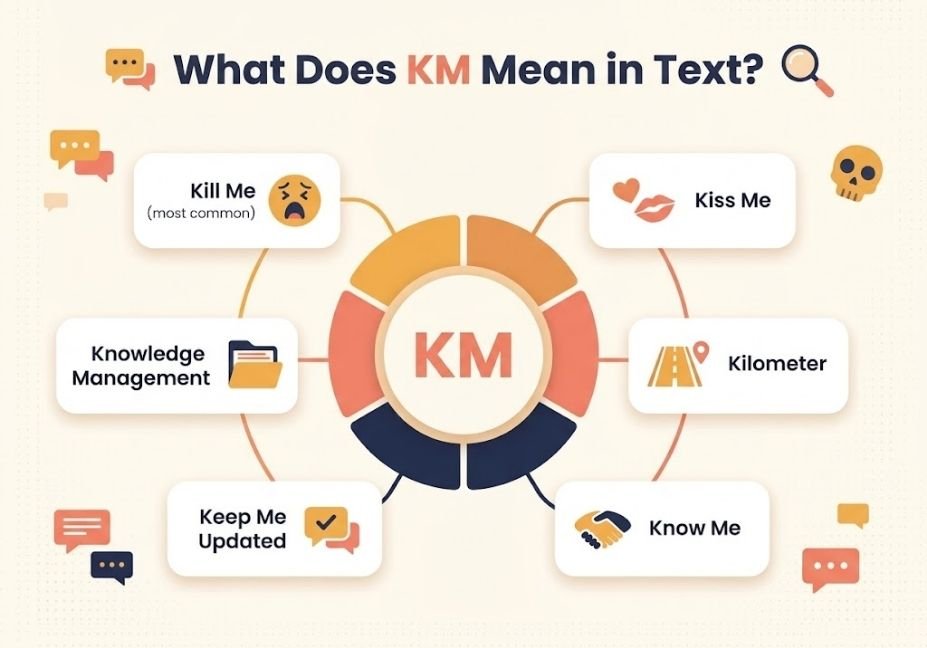
The Different Meanings of KM
Because KM is short and flexible, it’s picked up a handful of meanings depending on the platform and the people involved. Here’s a breakdown of the most common ones:
- Kill Me, a joking reaction to embarrassment or frustration.
- Kilometer, the standard unit of distance.
- Kiss Me, used flirtatiously between couples or romantic interests.
- Know Me, occasionally used when talking about familiarity or recognition.
- Keep Me (updated), sometimes used in group chats or work contexts.
- Knowledge Management, a business term used in professional settings.
Of these, “Kill Me” is by far the most common meaning you’ll run into on Snapchat, Instagram, TikTok, and in everyday texting between friends.
Where Did the Slang Version of KM Come From?
“Kill me” has been a common figure of speech for decades, long before texting existed. People have always used dramatic phrases to express frustration without meaning them literally, and “kill me” fits that same pattern as older exclamations like “I could just die.”
As texting and messaging apps grew, people naturally shortened frequently typed phrases to save time, and “kill me” eventually became simply KM.
This mirrors how many other abbreviations formed, condensing a full spoken phrase into a couple of letters once it became common enough in digital conversation. Language resources that track internet slang, including ongoing coverage from sites like Dictionary.com, have documented this same clipping pattern across dozens of abbreviations that started as full phrases and shrank once texting culture took over.
Today, KM shows up in memes, captions, comments, and private messages, and it has become closely associated with Gen Z and younger millennial texting habits, alongside similar reaction-based slang like “lmao” or “dead.”
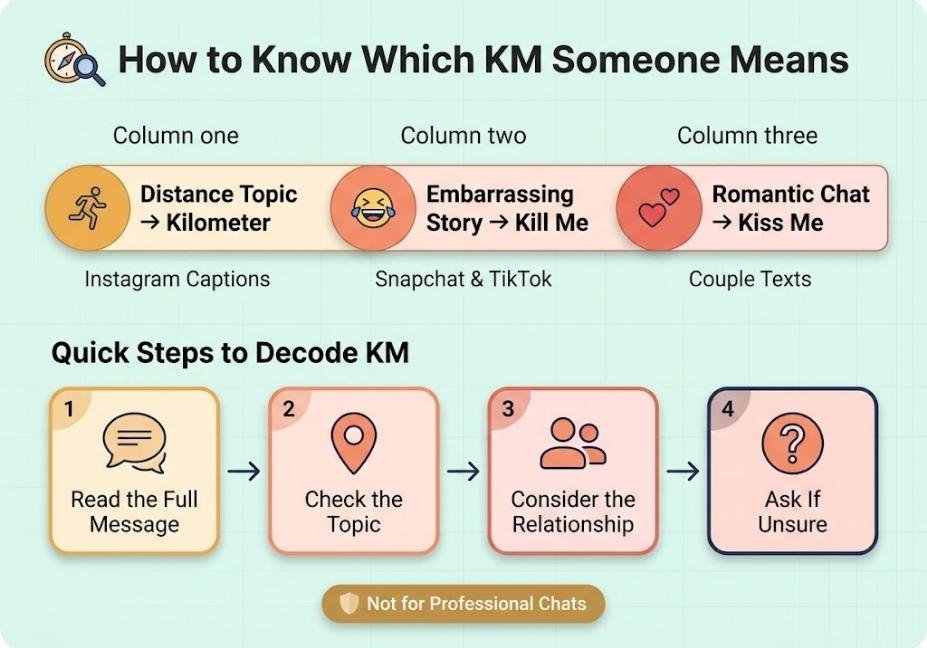
How to Tell Which Meaning Someone Means
Reading the surrounding conversation is the fastest way to figure out which version of KM you’re looking at. A few patterns make it easier:
- If the topic is distance, travel, or fitness, it almost certainly means kilometer.
- If it follows an embarrassing or funny story, it likely means “kill me.”
- If it’s between a couple or in a flirty conversation, it may mean “kiss me.”
- If it’s in a work chat about documentation, it could mean Knowledge Management.
- If it appears with a laughing or skull emoji, it’s leaning toward “kill me.”
When the meaning still isn’t obvious, it’s completely fine to just ask what someone meant. Slang is meant to speed up conversation, not create confusion.
Real Examples of KM in Conversation
Seeing KM in context makes the meaning click a lot faster than a definition alone. Here are a few realistic examples:
Example 1: “I waved back at someone who wasn’t even waving at me… KM 💀”
Example 2: “How far is the venue?” “About 12 km from here.”
Example 3: “Miss you already, KM 😘”
The first example is the classic embarrassment use, the second is the literal distance meaning, and the third leans flirty depending on the relationship between the two people texting.
Why People Use KM Instead of Spelling It Out
Typing “kill me” or “kiss me” isn’t exactly a lot of extra effort, so it’s fair to wonder why the abbreviation caught on at all. Part of the answer is speed. In fast-moving group chats or comment threads, shorter reactions keep the conversation moving without slowing anyone down to type a full sentence.
There’s also a social layer to it. Using shared slang like KM signals that the sender is plugged into the same casual, meme-driven communication style as the person they’re texting.
It softens the drama of a phrase like “kill me,” turning what could sound intense into something clearly playful and low-stakes. Abbreviating it removes the weight of the full phrase and replaces it with a wink, essentially telling the other person not to take it too seriously.
KM on Different Platforms
The likely meaning of KM shifts depending on where you see it, and getting a feel for each platform’s tendencies makes the guesswork easier.
On Snapchat, KM overwhelmingly means “Kill Me,” often paired with a skull or crying-laughing emoji after an embarrassing snap or story or On Instagram, it splits between the same “kill me” reaction in comments and captions, and the literal kilometer meaning in posts about running, hiking, or travel distances. On TikTok, it shows up constantly in comment sections reacting to cringe or relatable content, almost always meaning “kill me.”
In Discord and gaming chats, it tends to follow the same pattern, used as a quick, dramatic reaction to an in-game mistake or a frustrating loss. In workplace tools like Slack or email, KM is far more likely to refer to Knowledge Management, since the casual slang meanings rarely fit a professional tone.
Common Mistakes People Make With KM
Even with a clear definition in hand, it’s easy to misjudge KM in the moment. A few mistakes come up often:
- Assuming it always means kilometer, even in clearly casual conversations.
- Reading “Kill Me” as a literal cry for help instead of a joke.
- Using it in a professional email by accident.
- Missing the flirty “Kiss Me” meaning between romantic partners.
- Overanalyzing a message that was only meant to be lighthearted.
Slowing down to read the full sentence, rather than reacting to the two letters alone, clears up almost every one of these mix-ups.
KM vs. Similar Slang Terms
KM isn’t the only short reaction people use to express secondhand embarrassment or disbelief, and it helps to know how it compares to a couple of close relatives.
“Yeet” signals excitement or action, while KM signals emotional overwhelm rather than energy. “Lmao” reacts to something funny with laughter, while KM leans into drama, exaggerating how unbearable a situation feels rather than just laughing it off. Recognizing these small differences helps you read tone accurately instead of assuming every reaction abbreviation means the same thing.
Is KM Used the Same Way Everywhere?
Not quite. KM shows up most often among younger texters, particularly Gen Z and younger millennials, and it’s especially common on TikTok comments, Discord servers, gaming chats, and everyday text threads. Older texters are less likely to use the slang version at all and may default to the literal kilometer meaning if they see it out of context.
The platform also shapes the likely meaning. On Snapchat and Instagram, “kill me” dominates. In group chats centered on couples or dating, “kiss me” becomes more plausible. In workplace messaging tools, Knowledge Management is the only meaning that really fits.
Is It Okay to Use KM in Every Setting?
No. KM works fine in casual conversations with friends or a partner, but it doesn’t belong in professional emails, formal writing, or workplace chats, unless you’re specifically referring to Knowledge Management in a business context.
Because the phrase “kill me” can sound alarming out of context, it’s best kept to lighthearted, informal conversations where the joking tone is obvious.
In professional settings, abbreviations can easily be misunderstood, especially by people who are unfamiliar with texting slang.
Using KM in a work email or business message may create confusion and distract from your intended point. Context matters because written messages do not include facial expressions or tone of voice. Among close friends, KM is usually understood as an exaggerated reaction to something funny, awkward, or frustrating.
However, when communicating with coworkers, clients, teachers, or people you do not know well, it is generally better to use clear language. This helps avoid misunderstandings and ensures your message remains appropriate and professional.No.
KM works fine in casual conversations with friends or a partner, but it doesn’t belong in professional emails, formal writing, or workplace chats, unless you’re specifically referring to Knowledge Management in a business context.
Because the phrase “kill me” can sound alarming out of context, it’s best kept to lighthearted, informal conversations where the joking tone is obvious.
How to Reply to KM
There’s no single correct response, since the right reply depends entirely on the meaning behind the message. A few common options include:
- Laughing along or matching the dramatic tone if it’s the “kill me” version.
- Asking a follow-up question if the context is genuinely unclear.
- Responding warmly or playfully if it reads as “kiss me.”
- Answering the actual question if it’s referring to kilometers.
If a message ever feels genuinely concerning rather than joking, it’s always worth checking in directly rather than assuming it’s just slang.
When to Take KM Seriously
Because “Kill Me” is exaggerated on purpose, it’s easy to assume every use is automatically a joke. Most of the time it is, but context still matters. A message sent right after a funny or embarrassing story is almost certainly playful. A message that arrives out of nowhere, paired with genuinely upset language, or sent by someone who seems distressed deserves a real response rather than a laugh.
If anything about the tone feels off, it’s always better to check in directly and ask if the person is okay rather than assuming the slang meaning applies. Most of the time you’ll be right that it’s just dramatic texting shorthand, but it costs nothing to make sure.
Does Region or Age Change the Meaning?
Age plays a bigger role than location in how KM gets used. Younger texters, especially teens and people in their early twenties, often use KM to mean “kill me.” For many of them, it is a normal part of online reaction culture. They may use it to respond to something funny, embarrassing, or frustrating. In these conversations, the phrase is usually not meant literally.
Older texters often interpret KM differently. Many millennials and older adults are more likely to think of kilometers first. Some may not recognize the slang meaning at all. This difference can sometimes lead to confusion in text messages.
Location can also play a role. In countries that use the metric system, KM often appears as a measurement abbreviation. As a result, the literal meaning may feel more natural in everyday conversations. In other places, texting slang may be the more common interpretation.
These differences do not change the core meanings of KM. However, they can provide useful context when you are trying to understand an unclear message. Looking at the sender, the conversation, and the topic usually makes the intended meaning much easier to identify.
Frequently Asked Questions
What does KM mean in a text from a girl?
It usually depends on context, but “Kill Me” is the most common meaning, used jokingly to express embarrassment or frustration.
Does KM always mean kilometer?
No. In casual texting and social media, it usually means “Kill Me,” while kilometer is more common in conversations about distance.
Is KM appropriate for work chats?
Only if it refers to Knowledge Management. Avoid other slang meanings in professional or formal communication.
Can KM mean “Kiss Me”?
Yes, especially in romantic or flirty conversations between couples or people who are texting affectionately.
How do I know which meaning someone intends?
Look at the surrounding conversation, the platform, and your relationship with the sender. Context almost always clarifies it.
Final Takeaway
The km meaning in text depends heavily on where it shows up and who’s sending it, but “Kill Me” is the meaning you’ll run into most often in casual texting and social media, used as a joking reaction rather than anything literal. Outside of slang, it still holds its original meaning as the standard abbreviation for kilometer.
Once you know the handful of possible meanings and how to spot them from context, KM stops being confusing and starts reading exactly the way it was meant to, whether that’s dramatic, flirty, or purely about distance.