
SFS mean in text usually stands for “Shoutout For Shoutout.” It’s a social media deal where two users promote each other’s accounts, so both sides gain followers and engagement. You’ll see it most on Instagram, Snapchat, and TikTok, though it can occasionally mean “Snap For Snap” or “Sorry For Spam” depending on the chat.
You open Instagram, and someone comments “SFS?” on your latest post. Or a stranger slides into your DMs with just those three letters. If you’re wondering what does sfs mean in text, you’re not alone. Thousands of people search this exact phrase every month because the abbreviation shows up everywhere, yet nobody explains it when you first join a platform.
This guide breaks down the sfs meaning in text in plain language. You’ll learn where the term came from, what it means on each major app, the other meanings it can carry, and exactly how to reply when someone sends it your way.
|Also read this article: Why These Boxing Pick Up Lines Keep Getting Replies
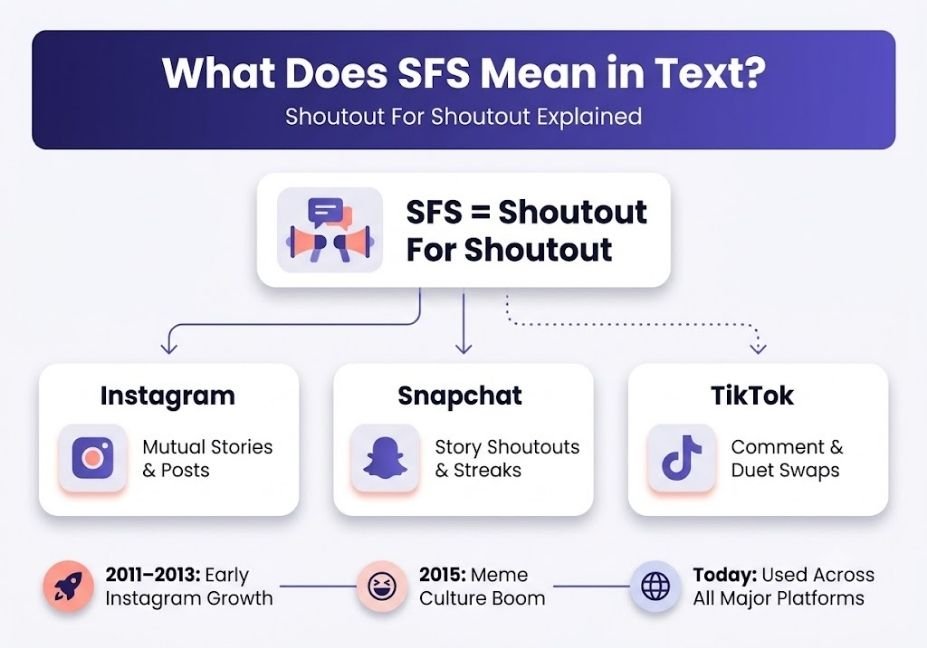
Where Did SFS Come From?
SFS started in Instagram’s early growth years, somewhere around 2011 to 2013. Back then, paid ads weren’t the easy button they are now, so smaller accounts and creators needed another way to reach new people. The answer was simple: trade exposure. One user would post about another user’s account, and that user would return the favor.
People began typing “shoutout for shoutout” so often in captions and comments that it got shortened to SFS, the same way “for your information” became FYI. The abbreviation saved time and fit the fast, caption-heavy style of social apps.
By the mid-2010s, meme pages and fan accounts pushed SFS into mainstream use. Today it’s a fixture across nearly every major platform, and most active social media users recognize it on sight.
The rise of SFS lines up closely with the rise of organic growth culture in general. Before algorithms rewarded video content the way they do now, follower count depended heavily on word of mouth and cross-promotion. Small creators figured out that teaming up beat competing, and SFS became the shorthand for that teamwork. It didn’t cost anything, it took only a minute to arrange, and it worked for accounts of almost any size.
Why Do People Use SFS?
SFS survives because it solves a real problem: getting noticed on a crowded platform. A brand-new account with zero followers has a hard time showing up in anyone’s feed. Teaming up with another small account, even briefly, puts both profiles in front of a fresh audience.
There’s also a social side to it. Doing an SFS with a friend can feel like a small favor, a way of saying “I’ve got your back” without much effort. Among creators, it can build a sense of community, since everyone remembers who supported them early on. For influencers and small businesses, it’s often the first form of collaboration before anything more formal, like a sponsored post or brand partnership, ever happens.
|Also read this article: FNS Net Worth in 2026: The Number Nobody Expected
What Does SFS Mean on Each Platform?
The core meaning of SFS stays the same everywhere, but how people use it shifts slightly from app to app.
SFS on Instagram
Instagram is where SFS is most common. Users post each other’s profiles on their Stories, tag each other in a feed post, or mention each other in a caption. The goal is simple: each account picks up new followers from the other person’s audience. You’ll often see it phrased as “SFS? Comment below” or “Doing SFS with anyone who likes this post.”
SFS on Snapchat
On Snapchat, SFS keeps its shoutout meaning but usually plays out through Stories rather than DMs. One user features a friend’s username on their Story, and that friend does the same in return. It’s a quick way to grow a Snapchat following or boost a streak count.
SFS on TikTok and Discord
On TikTok, people drop “SFS” in comments to ask a creator for a shoutout, or to propose a duet-and-feature swap. In Discord servers and gaming chats, SFS shows up when members promote each other’s channels, clans, or content within the community. It’s less about followers here and more about visibility inside a shared group.
SFS on WhatsApp and Texting
SFS is rare in regular text messages and WhatsApp chats, since those apps aren’t built for public promotion. When it does appear, it usually means the same mutual shoutout, just shared privately between two people who also post on other platforms.
SFS on Twitter and X
SFS shows up less often on Twitter and X, but it still appears in threads where accounts trade retweets or mentions to boost reach. Because the platform leans more toward text and news, SFS requests here tend to sound more direct, something like “SFS anyone building in public this week?”
SFS Compared to Similar Terms
SFS isn’t the only shoutout-style abbreviation floating around social media, and it helps to know how it differs from its close cousins.
- F4F (Follow For Follow): Both users simply follow each other, with no post or Story required.
- L4L (Like For Like): Users trade likes on a post rather than a shoutout.
- SO (Shoutout): A one-way promotion with no expectation of a return favor.
- Collab: A broader term covering any joint content, which can include an SFS as one part of the deal.
SFS sits in the middle of these, since it asks for more effort than a follow or a like but less commitment than a full collaboration.
Other Meanings of SFS
Slang rarely sticks to one definition, and SFS is no exception. Depending on the context, you might see it stand for something completely different.
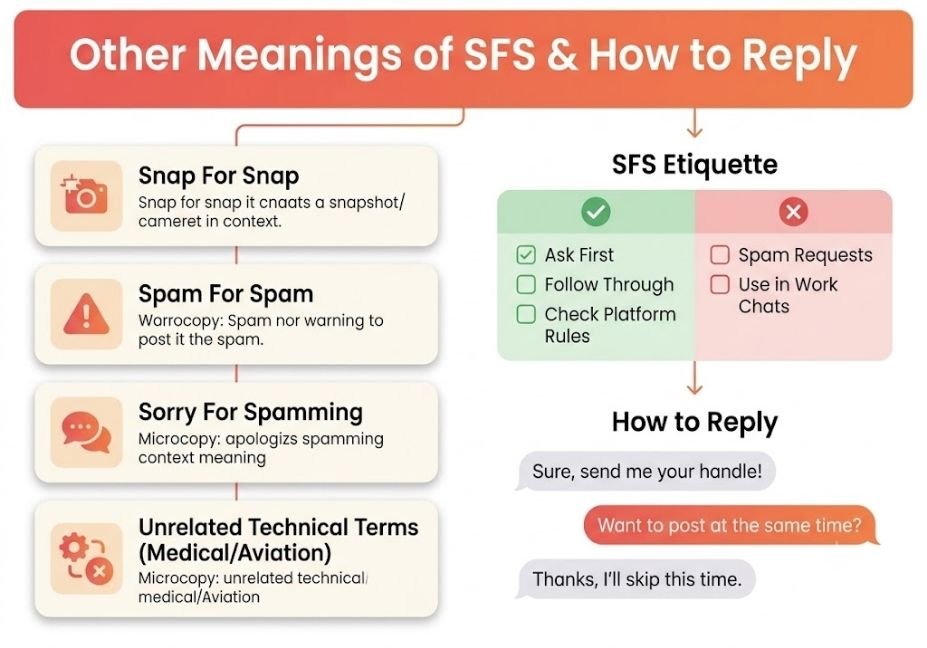
- Snap For Snap: Common on Snapchat, where users trade snaps back and forth instead of posts.
- Spam For Spam: A joking or slightly negative twist, used when people flood each other’s comments for attention.
- Sorry For Spamming: An apology someone sends after posting several messages or notifications in a row.
- So F-ing Stressed: Occasionally used in private chats between close friends, far removed from the social media meaning.
- Superficial Femoral Syndrome or Safe Flight System: Technical terms in medicine and aviation, unrelated to texting slang but worth knowing if the letters pop up outside a social app.
Context always decides which meaning fits. If the message shows up on Instagram, Snapchat, or TikTok, shoutout for shoutout is almost certainly the right read.
Is SFS Flirty, or Just Friendly?
Most of the time, SFS is not romantic. It’s a networking move, not a pickup line. When a girl or guy sends “SFS,” they’re typically asking for mutual promotion, not expressing interest. That said, tone and history between two people can shift how it lands. A stranger asking for SFS almost always means business, while a friend or crush sending it might be using it as a light, low-pressure way to interact.
According to a slang tracker maintained by Dictionary.com, internet abbreviations like SFS often carry different weight depending on the relationship between the two people texting, which is why reading the surrounding conversation matters more than the letters themselves.
How to Reply When Someone Sends You SFS
Replying is easy once you know what’s being asked. Here are a few natural responses you can copy:
- If you’re interested: “Sure, send me your profile and I’ll post you today.”
- If you want to set terms first: “Happy to do SFS, want to post at the same time?”
- If you’d rather pass: “Thanks for asking, I’ll skip this time.”
- If you’re confused about the context: “What do you mean by SFS here?”
You never owe anyone a shoutout just because they asked. Politely declining is completely normal, especially if the request comes from someone you don’t know.
SFS Etiquette: Dos and Don’ts
A little etiquette goes a long way when you’re trading shoutouts.
- Ask before posting someone’s profile, don’t assume.
- Follow through once you agree, since backing out damages trust.
- Avoid spamming strangers with repeated SFS requests.
- Skip SFS in professional or work-related chats entirely.
- Check platform rules first, since some communities discourage self-promotion.
Following these basics keeps SFS feeling like a fair trade instead of a nuisance.
Common Mistakes People Make With SFS
Even a simple term like SFS trips people up in a few predictable ways. Watch for these:
- Assuming SFS always means the same thing no matter where it’s used.
- Posting a shoutout before the other person has agreed to return it.
- Sending repeated SFS requests to the same stranger who hasn’t replied.
- Treating a declined SFS request as rude, when it’s usually just a preference.
- Mixing up SFS with F4F or L4L and offering the wrong type of trade.
Slowing down for a second before you reply avoids most of these mix-ups entirely.
Real Examples of SFS in Texts
Instagram DM Person A: “Hey, want to do an SFS this week?” Person B: “Yeah, send me your handle and I’ll post it tonight.”
TikTok Comment Person A: “Loved this video, SFS?” Person B: “For sure, I’ll feature you on my next post.”
Snapchat Chat Person A: “My follower count is low, wanna SFS?” Person B: “Let’s do it, you go first and I’ll match it.”
These examples show SFS working the same way it does across most apps: one small ask, one mutual trade, both sides walk away with a bit more visibility.
Instagram Story Person A posts a Story that says: “Doing SFS today, comment if you’re in!” Person B comments, and Person A screenshots the reply and features it later that afternoon.
Group Chat Person A: “Anyone want SFS for the new page I started?” Person B: “I’m down, drop your link and I’ll post it tonight.” Person C: “Same here, tag me when you’re ready.”
Does SFS Ever Go Wrong?
Most SFS trades go smoothly, but a few things can turn it sour. The most common complaint is when one side posts the shoutout and the other never follows through, leaving the deal one-sided. Another issue comes up when accounts use SFS purely to inflate numbers rather than build real engagement, which platforms like Instagram and TikTok now actively work to detect and limit. If an account promotes too often or trades shoutouts with low-quality profiles, its reach can actually drop instead of grow.
None of this means SFS is a bad idea. It just means treating it as a genuine exchange, not a quick trick, tends to work out better in the long run.
Frequently Asked Questions
What does SFS mean from a girl? The same as it does from anyone else: a request for mutual shoutout or promotion, not a romantic signal.
Is SFS flirty? Usually not. It’s mostly a social media growth tactic, though tone can shift between close friends.
What does SFS mean on Snapchat? Shoutout for shoutout, often done through Stories, sometimes tied to snap streaks.
Does SFS have other meanings? Yes, including Snap For Snap, Spam For Spam, and Sorry For Spamming, depending on context.
How do I respond to an SFS request? Agree with clear terms, ask for clarification, or politely decline if you’d rather skip it.
Is SFS the same as F4F? No. SFS means trading shoutouts or posts, while F4F just means trading follows with no post involved.
Conclusion
So, what does sfs mean in text? In almost every case, it means “Shoutout For Shoutout,” a simple trade where two users promote each other to grow their following. The exact flavor shifts a little by platform, from Instagram Stories to Snapchat streaks to TikTok comments, but the core idea stays the same: mutual support in exchange for mutual visibility. Now that you know the meaning, the platforms it shows up on, and how to reply, you’ll never have to guess again the next time those three letters land in your inbox.
Pingback: What Does DND Mean in Text? Full Meaning and Examples - Celebrity Auraa