
If someone just texted you “hbu” and you paused for a second before replying, you are not alone. What does hbu mean is one of the most common texting questions people search, and the answer is short and easy to remember once you see it.
In this guide, you will learn exactly what hbu stands for, where it came from, how people use it in real conversations, and when it might carry a slightly different tone. By the end, you will know exactly how to read it and how to use it yourself without a second thought.
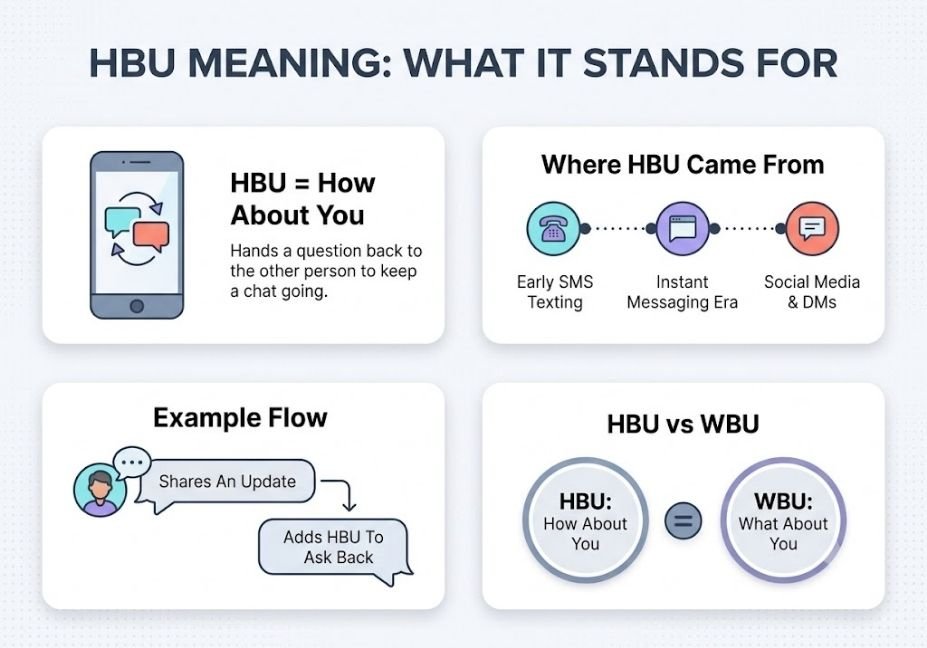
Hbu stands for “how about you,” a casual texting abbreviation used to turn a question or statement back to the other person and keep a conversation going.
What Does Hbu Mean In Text
Hbu is a short way of asking “how about you.” People use it right after answering a question or sharing something about themselves, as a quick way to hand the conversation back over. It works almost like a verbal baton pass, letting the other person know it is their turn to share.
The phrase shows up constantly in texts, DMs, and comment sections because it takes almost no effort to type while still keeping the conversation balanced. Instead of typing out “how about you” every single time, three letters do the same job. It is neutral in tone by default, though the words around it can shift how warm or casual it feels.
Hbu almost always appears in lowercase, which fits its relaxed, low-effort nature. You will rarely see it capitalized in casual texting, unlike some other abbreviations that get styled in all caps for emphasis. It also works with or without a question mark, both “hbu” and “hbu?” read the same way to most people, though adding the punctuation makes the question feel a touch more direct.
Because it is so short, hbu blends easily into the natural rhythm of texting. It can stand completely on its own as a one-word follow-up, or it can get tacked onto the end of a longer sentence without breaking the flow. Either way, it does the same job, inviting the other person to share their side of whatever topic just came up.
Where Hbu Came From
Hbu grew out of the same texting culture that produced other now-familiar shortcuts like lol, brb, and ttyl. Back when phones had character limits and typing on a numeric keypad was slow, shortening common phrases saved real time and effort. “How about you” was a natural candidate since it comes up constantly in everyday small talk.
The term picked up steam in the late 1990s and early 2000s as SMS messaging and early instant messaging platforms became popular among teens and young adults in the United States. As texting habits carried over into social media, hbu followed along naturally into Instagram comments, Snapchat chats, and TikTok DMs. According to 7ESL’s breakdown of common texting acronyms, hbu emerged directly from the need for brevity in digital communication, and it has stayed a staple of casual chat ever since.
Even as smartphones removed the character limits that originally pushed people toward shorthand, hbu stuck around because it still signals something useful, informality and social closeness. Typing the full phrase in a casual text can almost feel too formal once you are used to the shortcut version.
Part of the reason hbu has lasted so long comes down to how universally useful it is. Small talk never really goes away, and almost every casual conversation eventually reaches a point where one person wants to redirect attention back to the other. A short, low-effort way to do that will always have a place in texting, no matter how communication trends shift over time.
|Also read this article What Does STSU Mean in Text? The Full Meaning Explained
How People Use Hbu In Real Conversations
Hbu shows up constantly in everyday back-and-forth chats, almost always right after someone answers a question about themselves.
- A friend shares weekend plans and adds “hbu” to ask about yours
- A classmate answers how their exam went then follows with “hbu”
- Someone replies to “how’s it going” with a quick update then “hbu”
- A follower answers a poll-style caption question and tags on “hbu”
- A coworker in a casual team chat wraps up small talk with “hbu”
- A gamer shares their rank or score then asks “hbu” to compare
- Someone recovering from being sick gives an update then adds “hbu”
In every case, hbu works as a conversational handoff tool. It keeps the exchange from feeling one-sided by inviting the other person to share too, without needing a full sentence to do it. It is especially common in check-in style texts, the kind of message that opens with “how are you” or “what are you up to,” since those naturally invite a follow-up question in return.
What does hbu mean from a guy versus what does hbu mean from a girl usually comes down to exactly the same thing, genuine interest in continuing the conversation. The abbreviation itself carries no gendered tone at all. Any perceived difference comes from someone’s general texting habits rather than anything built into the term, a naturally chatty texter might follow it with extra questions, while a more reserved texter might leave it as a simple three-letter follow-up.
Is Hbu The Same As WBU
WBU stands for “what about you” and functions almost identically to hbu in everyday texting. The two are used interchangeably by most people, and there is no meaningful difference in what they communicate. Some people simply default to whichever one feels more natural to type, while others switch between the two depending on the exact wording of the conversation.
A few other related shortcuts show up in similar spots. HYD, short for “how’re you doing,” leans slightly more toward asking about someone’s current state rather than handing back a specific topic. None of these terms carry hidden meanings, they all serve the same basic purpose of keeping a casual conversation flowing evenly between both people.
It helps to notice the small grammatical difference between the two most common versions. Hbu technically pairs with “how,” so it fits more naturally after a statement about a state or feeling, like “I’m doing okay, hbu.” WBU pairs with “what,” so it tends to follow a statement about an activity or plan, like “I’m heading to the gym later, wbu.” In practice, almost nobody follows this distinction strictly, and both get used interchangeably no matter what came before them.
How Hbu Shows Up Across Different Platforms
The core meaning of hbu stays exactly the same no matter where it shows up, but the way people use it shifts slightly depending on the app. On Snapchat and iMessage, it usually appears in ongoing personal conversations between friends checking in on each other’s day. On Instagram and TikTok, it often shows up in comment sections under caption-style questions, where creators ask followers something and people reply with their own answer plus hbu to keep the exchange going.
In gaming chats and Discord servers, hbu tends to follow updates about scores, ranks, or in-game progress, a quick way for players to compare notes without breaking the pace of the game. On dating apps, hbu often carries a bit more warmth than it would in a casual group chat, simply because the whole conversation is already framed around getting to know someone. The consistency of its meaning across all these platforms is part of what makes it so easy to recognize no matter where you run into it.
Is Hbu Flirty
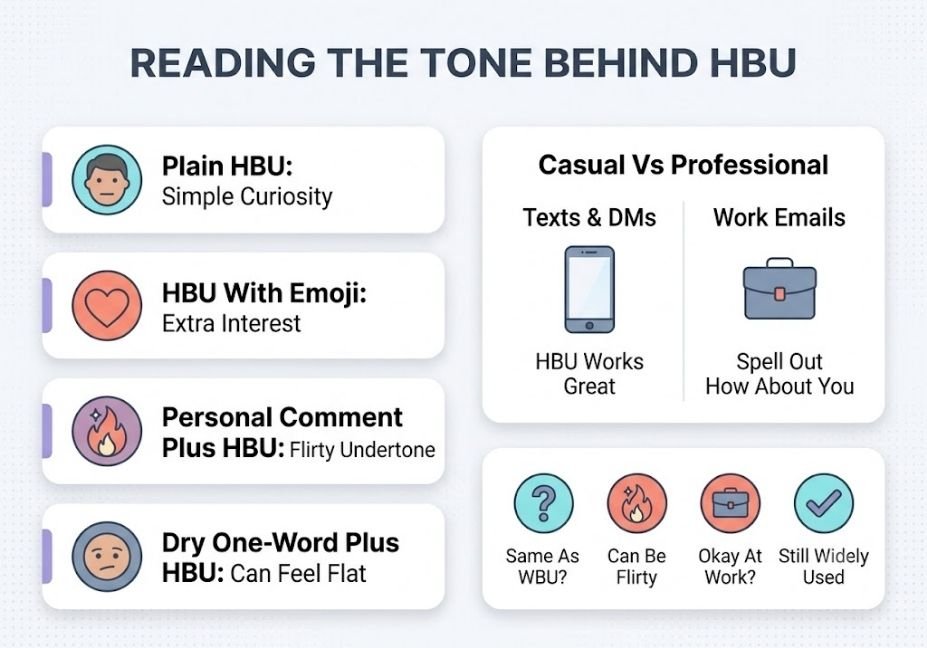
Hbu itself is neutral, but the words right before it can shift the tone significantly. A plain “hbu” after a short answer usually reads as simple curiosity or basic politeness. Paired with something more personal, like a comment about enjoying someone’s company or asking what they are doing later, hbu can pick up a flirtier undertone.
Context and existing chemistry between two people matter far more than the abbreviation itself. On dating apps specifically, hbu often carries a bit more warmth and genuine curiosity than it would in a group chat between casual acquaintances, simply because the whole conversation is already leaning toward getting to know someone.
Reading The Tone Behind Hbu
Since hbu is just three letters, the surrounding message usually does most of the emotional work. A short, dry “hbu” sent right after a one-word reply can come across as a little flat or disinterested, especially in a conversation that otherwise feels warm. Adding a question mark, an emoji, or extra letters like “hbuu” softens it and signals more genuine interest.
Punctuation choices matter more than people expect in texting. “Hbu?” reads as a clear, open question, while “hbu.” without any punctuation can feel abrupt or rushed depending on who sent it. Paying attention to these small details helps explain why the exact same three letters can feel completely different depending on who typed them and how.
Is It Okay To Use Hbu At Work
Hbu fits naturally into texts, DMs, and casual comment threads, but it tends to feel too informal for professional emails or messages to clients. In a work setting, a fuller phrase like “how about you” or “what about your side of things” keeps the same friendly tone without reading as rushed or overly casual. A relaxed internal team chat among coworkers who already text informally might be fine with an occasional hbu, but it is safer to match whatever formality level the other person is already using.
Older coworkers or clients unfamiliar with texting shorthand may not immediately recognize hbu, which can create a small moment of confusion in an otherwise smooth conversation. When writing to someone whose texting habits you do not already know well, spelling out the full phrase avoids that risk entirely while still keeping the message friendly and conversational.
Common Mistakes People Make With Hbu
A few small misunderstandings come up often enough to mention. Some people assume hbu must be sarcastic or dismissive if it arrives without any extra context, when in reality a bare hbu is simply the default, low-effort version of the question rather than a sign of disinterest. Others confuse hbu with unrelated acronyms that share a similar three-letter shape, mixing it up with terms tied to completely different meanings.
Another common mix-up happens when people try to overanalyze a single hbu for hidden meaning. Since it is such a short, common phrase, reading too much into it usually leads to more confusion than clarity. The safest approach is almost always to take it at face value, someone wants to know your side of the conversation too.
Frequently Asked Questions
Is hbu the same as wbu? Yes, both mean “how about you” and are used interchangeably with no real difference in meaning.
Is hbu flirty? Not by itself. Its tone depends entirely on the message and context surrounding it.
Is it rude to use hbu at work? Not rude, but too casual for formal emails. Use a fuller phrase for professional messages instead.
Do people still use hbu? Yes, hbu remains widely used in casual texting and social media, especially among Gen Z and millennials.
Final Takeaway
Hbu is a simple, friendly way to ask “how about you” without slowing down a fast-moving conversation. It works as a quick handoff that keeps a chat balanced, and its tone shifts depending on the words around it rather than the abbreviation itself. Whether it shows up in a casual catch-up text, a comment section, or a flirty back-and-forth, the core meaning stays the same, someone wants to know your side of the story too.
Small texting details like this one make everyday digital conversations easier to read and easier to navigate. Next time hbu shows up in your messages, you will know exactly what it means, where it came from, and exactly how to reply.
Pingback: CF Meaning In Text: What It Really Means In Chats - Celebrity Auraa
Pingback: What Does OG Mean? Full Slang Definition, Origin, and Uses - Celebrity Auraa
Pingback: DTF Meaning in Text: A Complete Guide to This Texting Slang Term - Celebrity Auraa