
If someone just texted you “DND” and you’re not sure what they meant, you’re not alone. It’s one of those short texting terms that shows up everywhere, from casual group chats to work messages, and it can feel confusing if you’ve never seen it before. So what does DND mean in text? In most cases, it’s simple: DND stands for “Do Not Disturb,” and it means the person doesn’t want to be interrupted right now.
That said, DND isn’t always used the exact same way. The tone can shift depending on who sends it and when. In this guide, you’ll learn exactly what DND means in texting, where the abbreviation came from, how it shows up in different types of conversations, and how to reply when you see it. By the end, you’ll never have to guess what DND means again.
Quick Answer: What Does DND Mean in Text?
DND in text means “Do Not Disturb.” It’s used to tell someone that you’re busy, unavailable, or don’t want notifications right now. People send it as a status update, a quick reply, or a heads-up before going quiet for a while. It’s not usually meant to be rude. It’s just a fast way to set a boundary.
Where DND Comes From
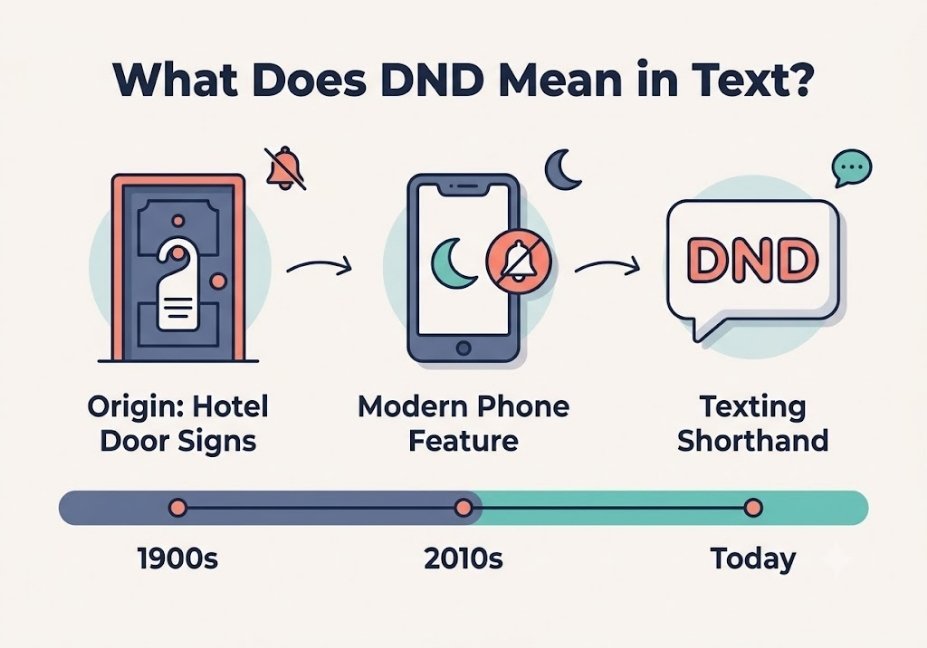
DND didn’t start on phones. The phrase “Do Not Disturb” has been around for over a century, most famously on the little door hangers hotel guests use to keep housekeeping away during a nap or a busy morning. That same idea eventually made its way into technology.
When smartphones introduced silent settings, “Do Not Disturb” became the official name for a mode that blocks calls, texts, and notifications from popping up or making noise. Once that feature became common on iPhones and Android devices, people started borrowing the phrase in everyday texting, even outside of the actual phone setting. According to Dictionary.com, the term is now widely used as a general privacy notification across digital devices and apps, not just as a formal feature name. Over time, “DND” the abbreviation became just as common as the full phrase, especially in casual messages where speed matters more than spelling everything out.
This shift mirrors how a lot of texting slang develops. A formal phrase gets attached to a piece of technology, people use that technology constantly, and eventually the phrase gets shortened for speed. DND followed the same path as other abbreviations like “brb” or “afk,” moving from a functional label into a casual expression people type without thinking twice about where it came from.
Why People Text DND Instead of Just Not Replying
You might wonder why someone bothers texting “DND” at all instead of simply staying quiet until they’re free. The answer comes down to communication, not convenience. Leaving a message unanswered for hours can make the other person worry, guess, or feel ignored. A quick DND removes that uncertainty in just three letters.
It also sets a clear expectation. Instead of wondering whether someone saw a message and chose not to reply, the receiver knows exactly why the conversation is paused. This small habit has become common because it protects both sides of a conversation. The sender gets uninterrupted time, and the receiver isn’t left in the dark.
The Most Common DND Meanings in Texting
In almost every texting context, DND means Do Not Disturb. But like a lot of internet abbreviations, it can carry a slightly different meaning depending on where you see it.
- Do Not Disturb: the person wants quiet time and fewer interruptions
- Dungeons and Dragons: common in gaming chats when planning a session
- Department of National Defense: used in formal or government contexts
If a friend texts “DND” in the middle of a normal conversation, they almost certainly mean Do Not Disturb. If it shows up in a gaming server talking about characters, dice, or campaigns, it’s probably Dungeons and Dragons. Context is really the deciding factor here, and in day-to-day texting, Do Not Disturb is by far the most common meaning.
How DND Is Used in Different Situations
DND shows up differently depending on who’s sending it and what kind of conversation you’re having. Here’s how it usually plays out.
From a Friend
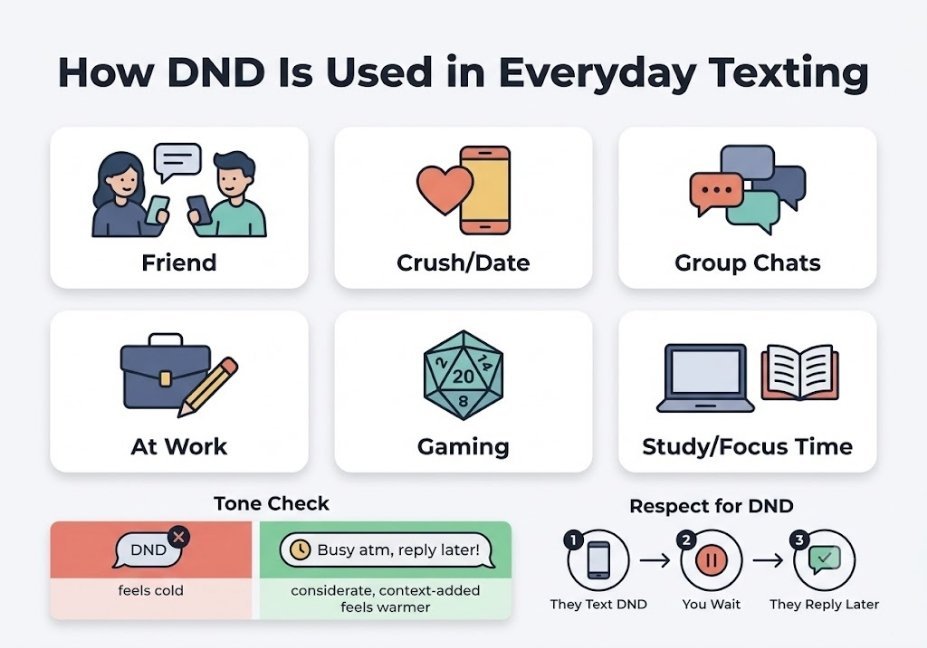
Between friends, DND is casual and low-stakes. Someone might text “on DND, ttyl” before a nap, a workout, or a busy afternoon. It’s a quick way to explain a delay in replying without writing out a whole sentence.
From a Crush or a Date
When DND shows up in texting from a guy or a girl you’re interested in, it usually still means the same thing: they’re busy right now. It’s not automatically a bad sign. People send DND when they’re in class, at work, or trying to focus, and it doesn’t necessarily reflect how they feel about you.
In Group Chats
In group chats, DND often gets used to mute a specific conversation rather than the whole phone. Someone might say “putting this chat on DND” if the group is getting too chatty during a busy day.
At Work
In professional messaging tools, DND usually points to a status setting rather than a personal choice of words. Someone appears as “DND” when they’ve turned on focus time or are in a meeting, which tells coworkers not to expect a quick reply.
In Gaming
Among gamers, DND can double as shorthand for Dungeons and Dragons, especially in Discord servers or fan communities. In that setting, “DND night” means a game session, not a request for silence.
With Family
Family group chats tend to move fast, especially around holidays or planning events. Someone might text DND during a work shift or a long drive, letting relatives know replies will be slow without needing to explain the whole day.
During Study or Focus Time
Students and remote workers often use DND to protect blocks of concentration. A message like “on DND until this assignment is done” tells friends not to expect a fast reply while also explaining exactly why.
Generational and Regional Differences in DND Usage
DND as a texting abbreviation is more common among younger texters, particularly teens and young adults who grew up with smartphone Do Not Disturb settings already built in. Older generations are more likely to recognize DND from hotel doors or office phone systems rather than from texting culture, so they may use the full phrase “do not disturb” instead of the shortened version.
Regional usage varies too. In countries like India, DND carries an additional, very specific meaning tied to telecom regulation, where consumers register their numbers on a “DND list” to block unwanted promotional texts and calls. In everyday personal texting elsewhere, that regulatory meaning rarely comes up, and DND simply reads as a personal availability status.
Common Mistakes to Avoid When Texting DND
A few small habits can turn a harmless DND text into an awkward one. Keeping these in mind helps the message land the way you actually intend.
- Sending DND with no context during a serious or emotional talk
- Using DND repeatedly without ever following up afterward
- Assuming DND always means the same urgency level to everyone
- Reading DND as rejection instead of a simple timing issue
Avoiding these habits keeps DND doing what it’s meant to do, which is manage time respectfully instead of creating distance.
Is DND Rude in Texting?
DND on its own isn’t rude, but tone can still shape how it lands. A short, unexplained “DND” with no context can feel a little cold, especially in the middle of an emotional or important conversation. Adding even a few extra words softens it a lot.
For example, “DND for the next hour, big meeting” reads very differently than just “DND” with nothing else attached. The meaning stays the same in both cases, but one feels considerate and the other can feel dismissive. If you’re worried about how your DND text might come across, a short explanation usually fixes it.
How to Reply When Someone Texts DND
When someone tells you they’re on DND, the easiest and most respectful response is to simply back off for a bit. You don’t need a long reply. A short “okay, talk later” or “no worries, ping me when you’re free” works well.
Avoid double texting right after someone says DND, since that defeats the purpose of the message. If it’s genuinely urgent, it’s fine to say so directly, like “totally understand, just one quick thing when you get a second.” That way you’re respecting their boundary while still flagging that something matters.
It also helps to remember that DND is about timing, not about you. People send it during exams, work shifts, family time, or even a nap, and none of those reasons have anything to do with how they feel about the conversation. Giving them a little room usually means you’ll get a fuller, more thoughtful reply once they’re back.
DND on Different Apps and Phones
Do Not Disturb isn’t just texting slang. It’s also a real feature built into most phones and messaging apps.
- iPhone: Do Not Disturb silences calls and notifications and can be scheduled automatically
- Android: similar functionality, sometimes labeled “Do Not Disturb” or “Focus mode”
- Snapchat and Instagram: users sometimes write DND in their bio or status to signal they’re off social media for a while
- Work chat tools: DND often appears as an automatic status when someone’s calendar shows a meeting
Because the phone feature and the texting slang share the same name, the meaning rarely gets lost between them. Whether it’s a setting or a message, DND is telling you the same basic thing: give me some space for now.
This overlap is actually helpful. Since most people already know what the Do Not Disturb feature does on their own phone, understanding the texting version takes almost no extra effort. The slang simply borrows meaning straight from a setting most people already use every day.
FAQs
What does DND mean from a girl or a guy in texting?
It almost always means the same thing regardless of gender: they’re busy and can’t reply right now.
Is DND rude in text?
Not usually. It can feel blunt without context, but it’s meant as a simple boundary, not an insult.
Does DND mean someone is ignoring me?
No. It typically means they’re occupied, not that they’re avoiding you on purpose.
What’s the difference between DND and silent mode?
Silent mode is a device setting. DND is often a chosen message or status telling someone why you’re unavailable.
What does DND mean on Snapchat or Instagram?
It usually means the same Do Not Disturb meaning, often used in a bio to show someone is taking a break from the app.
Can DND mean something other than Do Not Disturb?
Yes. It can also mean Dungeons and Dragons in gaming chats or Department of National Defense in formal writing.
Should I reply if someone texts me DND?
A short, low-pressure reply is fine. Save longer messages or questions for after they’re back online.
Conclusion
At its core, DND in texting means Do Not Disturb, a quick way for someone to say they need space, quiet, or focus time without writing a full explanation. While it can occasionally refer to Dungeons and Dragons in gaming chats or Department of National Defense in formal settings, the everyday texting meaning is almost always about needing a break from notifications and replies.
The next time you see DND pop up in a message, you’ll know exactly what it means and how to respond. A little patience, and maybe a short reply acknowledging it, goes a long way toward keeping the conversation easy on both ends