
November 15, 1991. A Los Angeles courtroom, packed and electric with grief and fury. A jury had already spoken, Soon Ja Du was guilty of voluntary manslaughter for shooting 15-year-old Latasha Harlins in the back of the head. All that remained was the sentence. Then Judge Joyce Karlin spoke from the bench: no jail time, five years probation, 400 hours of community service.
The courtroom erupted, while outside Harlins’ family wept in grief. In the months that followed, historians would trace a troubling line from that decision to the 1992 Los Angeles Riots. Meanwhile, as public debate intensified, the name Honorable Joyce Karlin Fahey became one of the most searched, debated, and misunderstood figures in California legal history..
Yet that single moment tells only a fraction of her story. Moreover, born in Venezuela, raised across four countries, she served as a federal prosecutor for 14 years, became a Superior Court judge, went on to serve as a two-term mayor, sat on an energy sector board, and is now a sought-after private mediator, her life defies any single headline.
Biography at a Glance
| Field | Detail |
|---|---|
| Full Name | Joyce Ann Karlin Fahey |
| Date of Birth | January 5, 1951 |
| Age (2026) | 75 |
| Birthplace | Caracas, Venezuela |
| Nationality | American |
| Profession | Retired Judge, Attorney, Mediator, Former Mayor |
| Spouse | Judge William F. Fahey |
| Children | One daughter (name not publicly confirmed) |
| Education | J.D., Loyola University Chicago School of Law, 1974 |
| Religion | Jewish |
| Current Residence | Manhattan Beach, California |
| Known For | Latasha Harlins / Soon Ja Du sentencing (1991); federal drug prosecutions |
| Net Worth Estimate | Estimated $1M to $3M (2025, unverified) |
| Languages | English, Spanish, Italian |
A Childhood Lived Across Four Continents
Not many American lawyers can say they grew up in Caracas, Buenos Aires, Rome, and Munich before landing in Chicago. Joyce Ann Karlin was born on January 5, 1951, in Venezuela, and spent her formative years moving across South America and Europe as her family relocated internationally. By the time she enrolled at Loyola University Chicago School of Law, she already spoke English and Spanish fluently and had absorbed enough Italian from her years in Europe to add a third language to her repertoire.
That multicultural upbringing mattered more than it might seem. Growing up at the intersection of different cultures, languages, and legal traditions gave her an instinct for navigating conflict across lines of background and experience. It is an instinct she would later rely on, first as a federal prosecutor handling high-stakes international drug cases, and eventually as a private mediator managing emotionally charged civil disputes.
Her family eventually settled in Chicago, and she enrolled at Loyola Law School, graduating with her J.D. in 1974. Two years later, she cleared the California Bar and headed west.
Her undergraduate degree remains undocumented in public records. A 2003 campaign lawsuit alleged her ballot statement implied a bachelor’s degree from Loyola Marymount University, though that matter did not derail her successful re-election. It is worth noting simply because accuracy demands it.
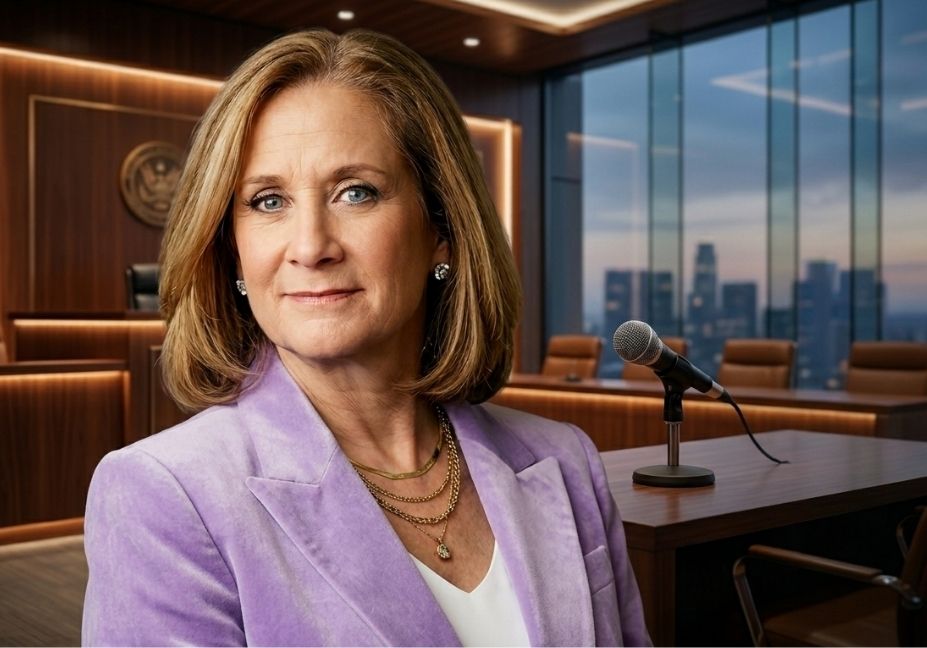
The Career That Four Resumes Could Not Contain
Most people build one career. Joyce Karlin Fahey built four.
Starting in the Trenches: Defense Work and Federal Prosecution
After her California Bar admission in 1976, she worked briefly as a defense attorney in both Chicago and Los Angeles. Then, in 1977, she joined the U.S. After graduating from law school, she joined the United States Attorney’s Office in Los Angeles as an Assistant United States Attorney. There, she would remain for 14 years.
That tenure was not quiet or routine. She prosecuted landmark federal drug cases, including the investigation into the kidnapping, torture, and murder of DEA Special Agent Enrique Camarena by a Mexican cartel one of the most significant and emotionally grueling federal cases of the 1980s. She also prosecuted Darnell Garcia, a corrupt DEA agent, and handled child pornography cases. According to her professional biography, she was lead counsel on dozens of trials and developed extensive federal appellate experience throughout that period.
This chapter of her record rarely appears in coverage of her. However, it is central to understanding who she was before the sentencing that made her notorious.
The Appointment That Changed Everything
In 1991, Republican Governor Pete Wilson appointed Karlin to the Los Angeles County Superior Court. She became a judge. Within the same year, she presided over the Soon Ja Du voluntary manslaughter case and her name entered American history in the most contentious of ways. That story is covered fully in the section below.
She remained on the bench until 1997, when she resigned and transitioned to private life.
Career Timeline
| Year | Milestone | Significance |
|---|---|---|
| 1974 | J.D., Loyola University Chicago | Entered law |
| 1976 | California Bar admission | Licensed to practice |
| 1977 to 1991 | Assistant U.S. Attorney, Los Angeles | 14-year federal career; major drug prosecutions |
| 1991 | Appointed to LA Superior Court | Judicial appointment by Governor Pete Wilson |
| 1991 | Soon Ja Du sentencing | Most publicly debated decision of her career |
| 1997 | Resigned from the bench | Transitioned to private life |
| 1999 to 2007 | Manhattan Beach City Council, two terms | Local elected office; served as Mayor in 2002 |
| 2008 | Manhattan Beach School Board Trustee | Education governance role |
| 2007 to present | Private mediator and arbitrator (ARC, then Signature Resolution) | Nearly two decades in ADR practice |
From Courtroom to City Hall
After leaving the bench, Karlin ran for local office. In 1999, she won a seat on the Manhattan Beach City Council. She served two full four-year terms, held the rotating mayoralty in 2002, and later served as a School Board Trustee beginning in 2008. For a woman whose career had played out on the largest possible stages. Moreover, federal courtrooms, Superior Court, national headlines. Moreover, these local roles reflect something genuine about her sense of civic obligation.
Joyce Karlin Fahey Net Worth: What the Numbers Actually Tell Us
Joyce Karlin Fahey’s net worth has not been publicly disclosed. Based on her career spanning 14 years as a federal prosecutor, seven years as a Superior Court judge, two terms as Manhattan Beach Mayor, board roles in the energy sector, and nearly two decades as a private mediator and arbitrator, independent estimates suggest a figure in the range of $1 million to $3 million as of 2025 — though this figure remains unverified.
How Does Joyce Karlin Fahey Make Her Money?
Today, her primary income flows from private mediation and arbitration work at Signature Resolution, a respected Los Angeles-based ADR firm. Senior neutrals operating at that level typically bill between $400 and $600 per hour, according to industry benchmarks, and her 19-plus years of ADR experience places her firmly in the senior tier.
Additionally, retired California Superior Court judges receive a pension from the state retirement system. Based on publicly available CalPERS data for judges with similar tenure, judicial pensions for seven-year bench service typically range from $80,000 to $130,000 annually, though Fahey’s exact figure is not on record.
She also draws on historical income from her energy sector advisory roles and her years in federal and local government.
Net Worth Breakdown
| Income Source | Estimated Contribution | Notes |
|---|---|---|
| Private mediation and arbitration fees | Primary, ongoing | Industry rate $400 to $600 per hour; 19-plus years experience |
| California judicial pension | Ongoing | Based on 7 years on the bench; exact figure unconfirmed |
| Business and advisory roles | Historical | Blackstone Oil board; E&B Natural Resources advisor |
| City Council stipend | Historical, minor | Manhattan Beach elected position |
| Real estate | Unconfirmed | 30-plus year Manhattan Beach resident |
| Social media or brand deals | Negligible | No public presence identified |
All figures above are industry benchmarks and independent estimates. No verified disclosure exists.
The Business World She Quietly Entered
Here is a detail that nearly every profile of Karlin Fahey overlooks entirely. However, after leaving the judiciary, she did not simply return to law. She also entered the energy sector.
Fahey served on the board of Blackstone Oil, which stands as the only publicly confirmed board directorship in her name. Furthermore, she worked as Executive Advisor to E&B Natural Resources, an independent petroleum company with operations throughout the United States. Her ARC mediator profile specifically notes her “special expertise in oil, gas and energy matters” as a result of these roles.
For a retired judge, that is an unusual and notable professional pivot. It also suggests a financial acumen that extends well beyond courtrooms and council chambers.
Life in Manhattan Beach: Rooted, Not Retired
Manhattan Beach is one of the most desirable coastal communities in the Los Angeles metro area, and Karlin Fahey has called it home for more than 30 years. Moreover, she has not simply lived there. Furthermore, she has governed it, served on its school board, and built community relationships that long outlasted her time on the bench. Moreover, her connection to the city extends far beyond her judicial service.
Indeed, that kind of civic depth is rare for someone whose name carries the weight of a national controversy. She chose a community, dug in, and served it across multiple roles over multiple decades.
Furthermore, her international upbringing in Venezuela, Argentina, Italy, and Germany gives her a worldliness that no doubt informs her work as a mediator handling cross cultural disputes. Beyond that documented background, however, no verified details about her current lifestyle, property, or travel habits are available, and speculation would serve no one here.
The Marriage That Quietly Reshaped Her Public Identity
After resigning from the Superior Court in 1997, Joyce Karlin took the surname of her husband, Judge William F. Fahey, himself a Los Angeles Superior Court judge. The couple has one daughter, who attended the University of San Diego, according to a Manhattan Beach Youth Council profile from approximately 2019.
Their daughter’s name is not publicly confirmed, and this article will not speculate. What is notable, though, is that the name change itself marked a deliberate shift — from the judge whose sentencing made national headlines to a private citizen building a second act on her own terms.
Meanwhile, according to all available public records, Fahey remains married to Judge William F. Fahey, and no reports of separation or divorce have surfaced.
Social Media and Public Presence
Unlike many public figures of comparable profile, Joyce Karlin Fahey maintains no verified presence on Instagram, X (formerly Twitter), Facebook, or LinkedIn. Her professional footprint exists through firm profiles at Signature Resolution and previously through the Alternative Resolution Centers. Additionally, third party sites that claim to calculate her Instagram earnings are generating entirely fabricated figures based on automated templates rather than actual data.
The Sentencing That Shook Los Angeles
This section demands full and honest treatment, because it is the reason most people search her name.
On March 16, 1991, 15-year-old Latasha Harlins entered the Empire Liquor Market in South Central Los Angeles with two dollar bills in her hand, reaching for a bottle of orange juice. The store’s owner, a Korean-American woman named Soon Ja Du, accused her of shoplifting. A struggle followed. As Harlins turned to walk away, Du shot her in the back of the head. A surveillance camera recorded everything. Harlins died with the money still in her hand.
The jury convicted Du of voluntary manslaughter, an offense carrying up to 16 years in prison. Then Judge Karlin sentenced her to five years’ probation, 400 hours of community service, a $500 fine, and a suspended 10-year prison term. No jail time.
The reaction was immediate and volcanic. Outside the courthouse, Harlins’ family and supporters wept and shouted. Meanwhile, the Los Angeles County District Attorney issued a blanket affidavit barring Karlin from presiding over felony cases involving violent crimes. Community leaders, in turn, condemned the decision as emblematic of systemic racial bias. Notably, the juxtaposition most sharply highlighted by critics was that, in the same week, Karlin sentenced a Glendale man to a harsher outcome for kicking a dog.
From the bench, Karlin stated: “This is not a time for rhetoric. It is not a time for revenge. It should be a time for healing.” She cited the altered trigger mechanism of the weapon Du used, arguing that the gun’s modification raised questions about whether Du had consciously intended to fire.
A California state appeals court unanimously upheld her sentencing decision 3 to 0 on April 21, 1992. Approximately one week before the Los Angeles Riots began. Historians, including UCLA’s Brenda Stevenson in her extensively researched 2013 study of the Latasha Harlins case, have since analyzed this decision as one of the embers that ignited the deadliest urban uprising in American history since 1968.
The legal outcome and the moral outrage, as one observer noted at the time, operated on entirely separate tracks.
How Her Legacy Compares to Peers
Retired judges rarely become public figures. Those who do tend to occupy very different positions than Fahey.
| Name | Estimated Net Worth | Primary Career |
|---|---|---|
| Joyce Karlin Fahey | $1M to $3M (est., unverified) | LA Superior Court, federal prosecutor, private ADR |
| Lance Ito | Not publicly disclosed | LA Superior Court; presided over O.J. Simpson trial |
| Judith Sheindlin (Judge Judy) | Approximately $500M (est.) | TV personality; former New York family court judge |
The comparison with Judge Judy is illustrative of scale, not equivalence. Sheindlin’s wealth comes from decades of television production deals — a path Fahey never pursued. The point is simply that the financial ceiling for a retired judge who remains in private legal practice looks very different from one who transitions into media. Fahey chose the former, consistently, across every chapter of her career.
The Legacy She Carries — All of It
Few American legal careers span the range that Honorable Joyce Karlin Fahey’s does. During the 1980s drug war, she prosecuted high risk federal cases. In addition, she served her community as an elected official and school board trustee. Later, she built strong expertise in energy sector governance. Over the past two decades, she has resolved complex disputes as a private mediator.
And then there is the Harlins sentencing. That decision follows her permanently, as well it should. Furthermore, it shaped the emotional and political landscape of Los Angeles in 1992 and continues to echo in scholarly literature, cultural work, and conversations about racial justice in the American legal system. Beyoncé referenced Latasha Harlins in Lemonade. Moreover, the case appears in theater, film, and law school curricula. Every time it resurfaces, Karlin Fahey’s name resurfaces with it.
Still, the full record belongs here too. The Camarena prosecution. The Manhattan Beach years. The quiet work of ADR that has filled the decades since she left the courtroom. Public figures are rarely just one moment, even when that moment is as historically significant as this one.
Her story, taken whole, represents the permanent weight of judicial decisions and the complicated, continuing lives of those who make them.
What Is Joyce Karlin Fahey Doing Now?
As of 2025 and 2026, Fahey continues her work as a mediator and arbitrator through Signature Resolution in Los Angeles. Moreover, she handles complex civil disputes across commercial, employment, and real estate matters. With nearly two decades of ADR experience accumulated since leaving the bench, she remains an active and sought-after neutral in California’s legal community. No retirement from ADR practice, new political campaigns, or judicial appointments have been publicly announced.
Frequently Asked Questions
What is Joyce Karlin Fahey’s net worth?
Joyce Karlin Fahey’s net worth has not been publicly disclosed. Based on her career spanning 14 years as a federal prosecutor, seven years as a Superior Court judge, two terms as Manhattan Beach Mayor, energy sector board roles, and nearly two decades as a private mediator and arbitrator, independent estimates place her net worth between $1 million and $3 million as of 2025, though this remains unverified.
How old is Joyce Karlin Fahey?
Joyce Karlin Fahey was born on January 5, 1951, in Caracas, Venezuela, making her 75 years old as of 2026. Her zodiac sign is Capricorn.
Why is Joyce Karlin Fahey famous?
She is primarily known for her 1991 sentencing of Soon Ja Du, the Korean-American store owner convicted of voluntary manslaughter in the killing of 15-year-old Latasha Harlins, to probation with no jail time. The decision sparked widespread outrage and is cited by historians as a contributing factor to the 1992 Los Angeles Riots.
Where did Joyce Karlin Fahey go to law school?
She received her J.D. from Loyola University Chicago School of Law in 1974 and was admitted to the California Bar in 1976.
What federal cases did Joyce Karlin Fahey prosecute?
During her 14 years as an Assistant U.S. Attorney in Los Angeles from 1977 to 1991, she prosecuted major federal drug cases including the Enrique Camarena kidnapping and murder case involving a Mexican drug cartel, the Darnell Garcia corrupt DEA agent case, and child pornography prosecutions. She served as lead counsel on dozens of trials.
How does Joyce Karlin Fahey make money today?
She works as a private mediator and arbitrator through Signature Resolution in Los Angeles. Senior mediators at that level typically charge between $400 and $600 per hour based on industry benchmarks. She also receives a California judicial pension based on her seven years on the Superior Court bench.
Is Joyce Karlin Fahey still married?
Yes. She is married to Judge William F. Fahey, a Los Angeles Superior Court judge. She adopted his surname after leaving the bench in 1997. The couple has one daughter.
What happened to Joyce Karlin Fahey after she left the bench? After resigning from the Superior Court in 1997, she relocated to Manhattan Beach, won a City Council seat in 1999, served two full terms including rotations as Mayor, joined the Manhattan Beach School Board, served on the board of Blackstone Oil, and eventually built a career as a private mediator and arbitrator first at ARC and then at Signature Resolution.
What is Joyce Karlin Fahey doing now?
As of 2025 and 2026, Fahey continues active mediation and arbitration practice through Signature Resolution in Los Angeles, handling complex civil disputes in commercial, real estate, and employment matters. She has accumulated nearly two decades of ADR experience since leaving the Superior Court bench.
Was the Latasha Harlins sentencing upheld on appeal?
Yes. A California state appeals court upheld the sentencing decision unanimously, 3 to 0, on April 21, 1992 approximately one week before the Los Angeles Riots began. The legal validity of the sentence and the widespread moral outrage it generated operated on entirely separate tracks throughout.
Conclusion
Joyce Karlin Fahey’s career does not fit neatly into any single category. She was a federal crime-fighter before she was a judge, a mayor before she was a mediator, and a civic servant at every stage in between. Ultimately, the Latasha Harlins sentencing will remain attached to her name permanently, as it should, given its historical weight and human cost.
However, the full record demands more than a single headline. Additionally, the Camarena prosecution, the energy board, the Manhattan Beach council chambers, and the decades of quiet, skilled conflict resolution work that followed the storms of 1991 and 1992, all reflect the breadth of her career.
Moreover, the measure of a life in law is not a single ruling. It is the full record: the cases built, the communities served, and the long, steady work of resolution that follows. For more on the events that shaped this legacy, explore the history of the 1992 Los Angeles Riots and the Killing of Latasha Harlins.
Pingback: Birthday Pick Up Lines For Crush They Can't Ignore - Celebrity Auraa