
Quick answer: “A chip off the old block” means someone, usually a child, closely resembles a parent or older relative in looks, personality, or behavior. It’s almost always used warmly, as a compliment.
Ever heard someone say a kid is “a total chip off the old block” and wondered what it actually means? It’s one of those English idioms that sounds a little odd if you think about it literally, but it’s simple once you know the story behind it. The phrase a chip off the old block is used every day, in conversation, in books, and even in casual work chats about mentors and their protégés.
In this article, you’ll learn exactly what the phrase means, where it came from, whether it’s always a compliment, and how to use it naturally in your own sentences, with real examples so you never second-guess yourself again.
|Also read this article Birthday Pick Up Lines For Crush They Can’t Ignore
What Does “A Chip Off the Old Block” Mean?
At its core, the phrase describes someone who strongly resembles a parent or older family member. That resemblance can show up in:
Physical appearance, like the same eyes or smile
Personality traits, like humor or stubbornness
Talents or skills, like a love of music or business
Values and habits passed down over time
It’s not limited to looks. In fact, most people use the phrase to point out a behavior or personality match rather than a physical one. If a daughter runs her own bakery just like her mother did, people will say she’s a chip off the old block, even if she doesn’t look like her mom at all.
|Also read this article Sunflower Pick Up Lines: The One Everyone’s Stealing
Where Does the Phrase Come From?
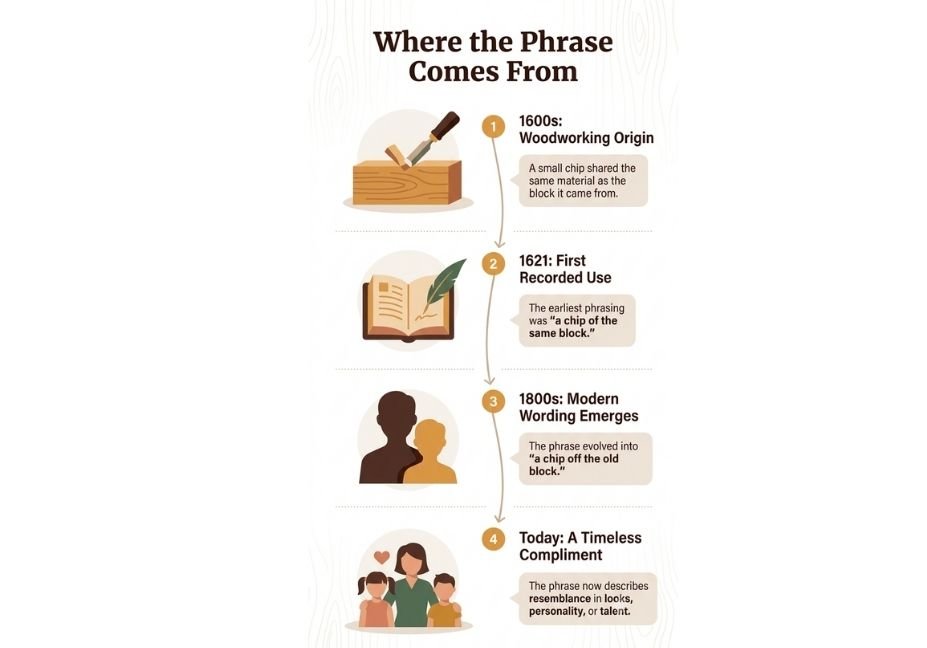
The idiom has roots in woodworking and stonecutting, trades where craftsmen would chip small pieces off a larger block of wood or stone. That small chip naturally shared the same texture, grain, and material as the block it came from, a fitting image for how children share traits with their parents.
The earliest known version of the phrase appeared in the 1600s, in a slightly different form: “a chip of the same block.” Over the next two centuries, the wording shifted to the version we use today, and by the 1800s, “a chip off the old block” had become common in everyday English writing and speech.
Language reference sites that track idiom history, including researchers who study English phrase origins, note that the meaning has stayed remarkably stable for centuries, a rare thing for such an old expression.
Is It Always a Compliment?
Almost always, yes. The phrase carries a warm, proud, sometimes humorous tone, and it’s rarely used to criticize someone. Parents often say it themselves, with obvious pride, when their child shares a talent or personality trait with them.
There’s a small exception: sometimes people use it with a wink when the shared trait is a flaw rather than a strength, like a shared stubborn streak or a tendency to run late. Even then, the tone is usually more amused than harsh.
Can You Use It for Daughters, Mothers, or Mentors?
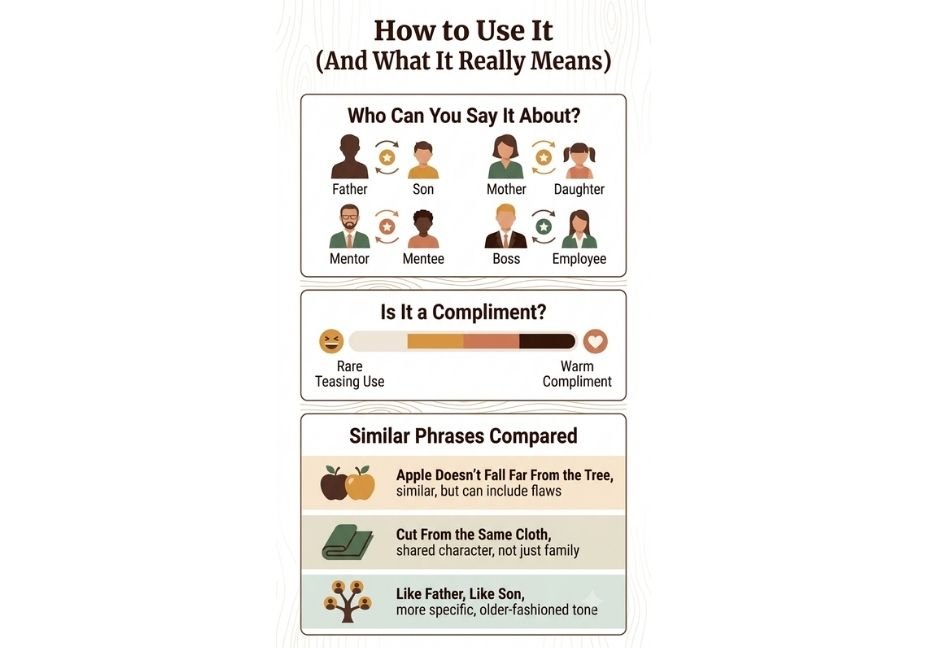
Yes. Although people originally used the phrase mainly for fathers and sons, today they use it in a fully gender-inclusive way and apply it to many relationships beyond parent and child. Today, people commonly use it for:
Daughters who take after their mothers or fathers
Mothers who share traits with their own mothers
Mentors and the students or employees who follow their lead
Bosses and the team members who pick up their habits or work style
If someone closely mirrors another person’s traits, talents, or approach, the phrase fits, family tie or not.
|Also read this article Gemini Pick Up Lines: Genius or Cringe? You Decide
How to Use It in a Sentence
The structure is simple: [person] + is + a chip off the old block, often followed by an explanation of the resemblance. Here are a few natural examples:
“She’s a chip off the old block, just as sharp with numbers as her dad.”
“He started the family restaurant right after college, a true chip off the old block.”
“Their son is a chip off the old block when it comes to that stubborn streak.”
“My new hire is already a chip off the old block, handling clients just like I do.”
One thing to avoid: don’t use the phrase for objects or unrelated things. It’s meant for people (or occasionally animals) who resemble another person, not for describing similar products, cars, or brands.
Similar Idioms and How They Compare
A few other idioms express a similar idea, but with slightly different shades of meaning:
“The apple doesn’t fall far from the tree,” nearly identical meaning, but often used when the resemblance includes a flaw or complicated trait, not just a positive one.
“Cut from the same cloth,” focuses more on shared character or values between two people, not necessarily a parent-child pair.
“Like father, like son,” more specific to fathers and sons, and slightly more old-fashioned in tone.
“A chip off the old block” remains the most flexible and widely used of the group, which is part of why it’s still common in everyday speech.
Frequently Asked Questions
What does “chip off the old block” mean?
It means a person closely resembles a parent or elder in looks, personality, or talent. It’s typically used as a warm compliment.
Where does the phrase come from?
It comes from woodworking and stonecutting, where a small chip shared the same material as the larger block it came from.
Is “chip off the old block” a compliment?
Yes, almost always. It’s occasionally used humorously when the shared trait is a minor flaw, but it’s rarely meant as criticism.
Can you say “chip off the old block” for a daughter?
Yes. Modern usage applies to daughters, mothers, mentors, and anyone who closely resembles another person in traits or talent.
What’s a synonym for “chip off the old block”?
“The apple doesn’t fall far from the tree” and “cut from the same cloth” are the closest common alternatives.
Final Takeaway
“A chip off the old block” is a simple, centuries-old way of pointing out that someone strongly resembles a parent or mentor, in looks, personality, or skill. It started as a woodworking image and turned into one of English’s most enduring family compliments. Whether you’re describing a daughter who inherited her mom’s business sense or an employee who mirrors their boss’s work ethic, this phrase still lands perfectly today.