
You’re scrolling through a text or DM, and there it is: “TM.” No context, no explanation, just two letters staring back at you. If you’ve ever paused mid-conversation wondering what does TM mean in text, you’re far from alone. It’s one of those short abbreviations that shows up everywhere, from group chats to Instagram comments, and it doesn’t always mean the same thing twice.
The good news is that TM isn’t complicated once you know what to look for. In this guide, you’ll learn every common meaning of TM in texting, how it changes depending on who sent it and where, and how to reply without any awkward guessing.
Abbreviations like this exist because texting rewards speed. Nobody wants to type out a full sentence when two letters get the point across just as fast. The tradeoff is that shorthand like TM can feel like a small puzzle when you’re not used to it. By the end of this article, that puzzle will be easy to solve every time.
Quick Answer: What Does TM Mean in Text?
In most casual texting and social media chats, TM usually means “text me,” “too much,” or “trust me,” depending on the sentence around it. In business or legal writing, TM stands for “trademark.” The exact meaning always depends on the context of the conversation.
Also Read: Fairy Pick Up Lines That Sounds Like Pure Magic
The Most Common Meanings of TM in Texting
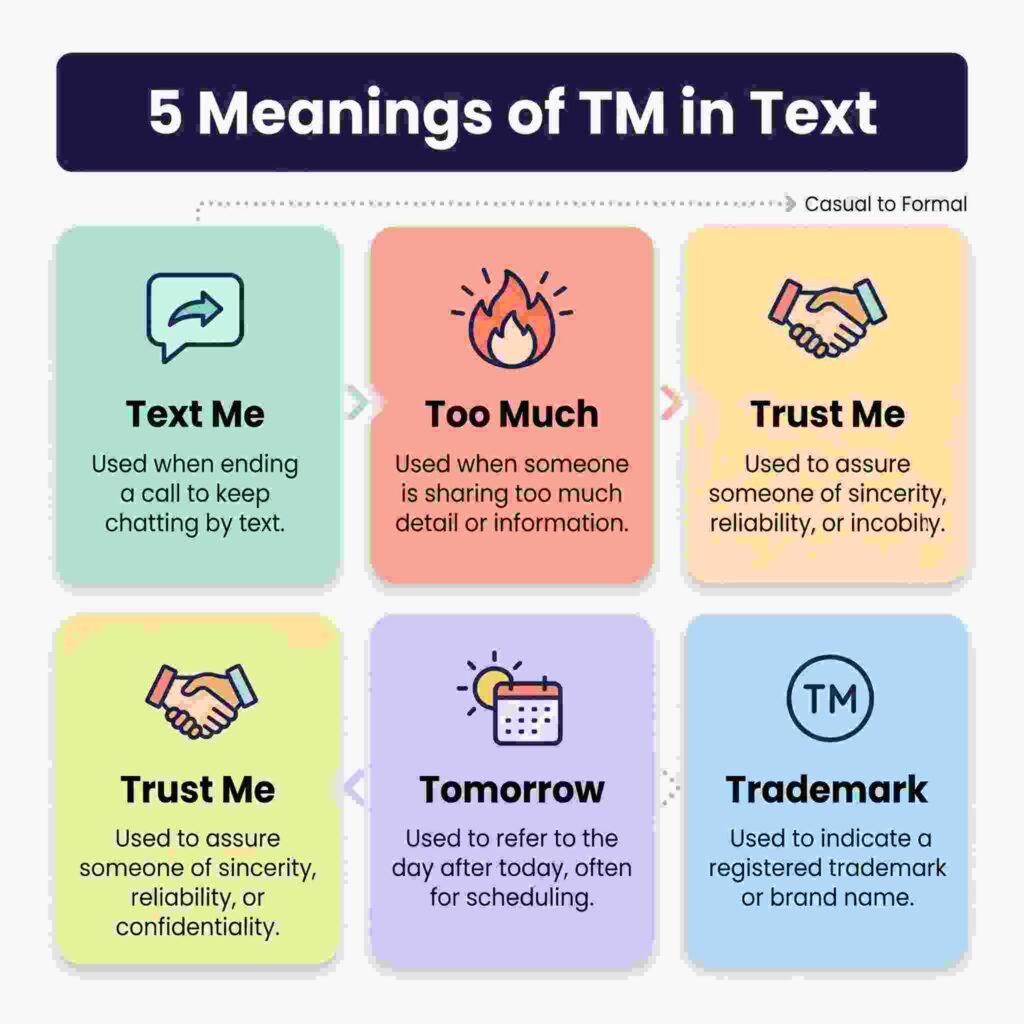
TM is short, which is exactly why it can mean so many different things. Here are the meanings you’ll run into most often.
1. Text Me
This is one of the simplest and most common uses. Someone might end a conversation with “TM later” to say they’d rather continue over text than a call. It often shows up when a person is wrapping up a phone call or a face-to-face chat and wants to keep talking through messages instead. Think of it as a quick handoff from one type of conversation to another.
2. Too Much
When someone reacts to a wild story, a dramatic moment, or something emotionally intense, TM often means “too much.” It’s a quick way to express that something was overwhelming, in a good or bad way. This version of TM carries a lot of emotional weight for such a short abbreviation. It can describe secondhand embarrassment, a plot twist in a show, or even a friend’s chaotic weekend story.
3. Trust Me
In reassuring messages, TM can stand in for “trust me.” It’s often used to add confidence to a statement, like when someone is convincing a friend that a plan will work out. This meaning tends to show up right before or after a suggestion, almost like a verbal handshake that says “I’ve got this.”
4. Tomorrow
In some circles, especially among younger texters, TM is shorthand for “tomorrow.” You’ll usually see this in messages about plans, like “let’s hang out TM” instead of typing the full word. It’s a close cousin of “tmrw,” another common shorthand for the same day, and the two are often used interchangeably depending on personal habit.
5. Trademark
This is the original and most formal meaning. TM appears next to brand names, logos, and slogans to show they’re legally protected, even before a business completes full trademark registration. Companies have used this symbol for well over a century to signal ownership of their brand identity. Unlike the casual texting meanings, this version follows strict legal conventions and shows up in marketing materials, packaging, and official documents rather than everyday chats.
How to Tell Which Meaning Someone Means
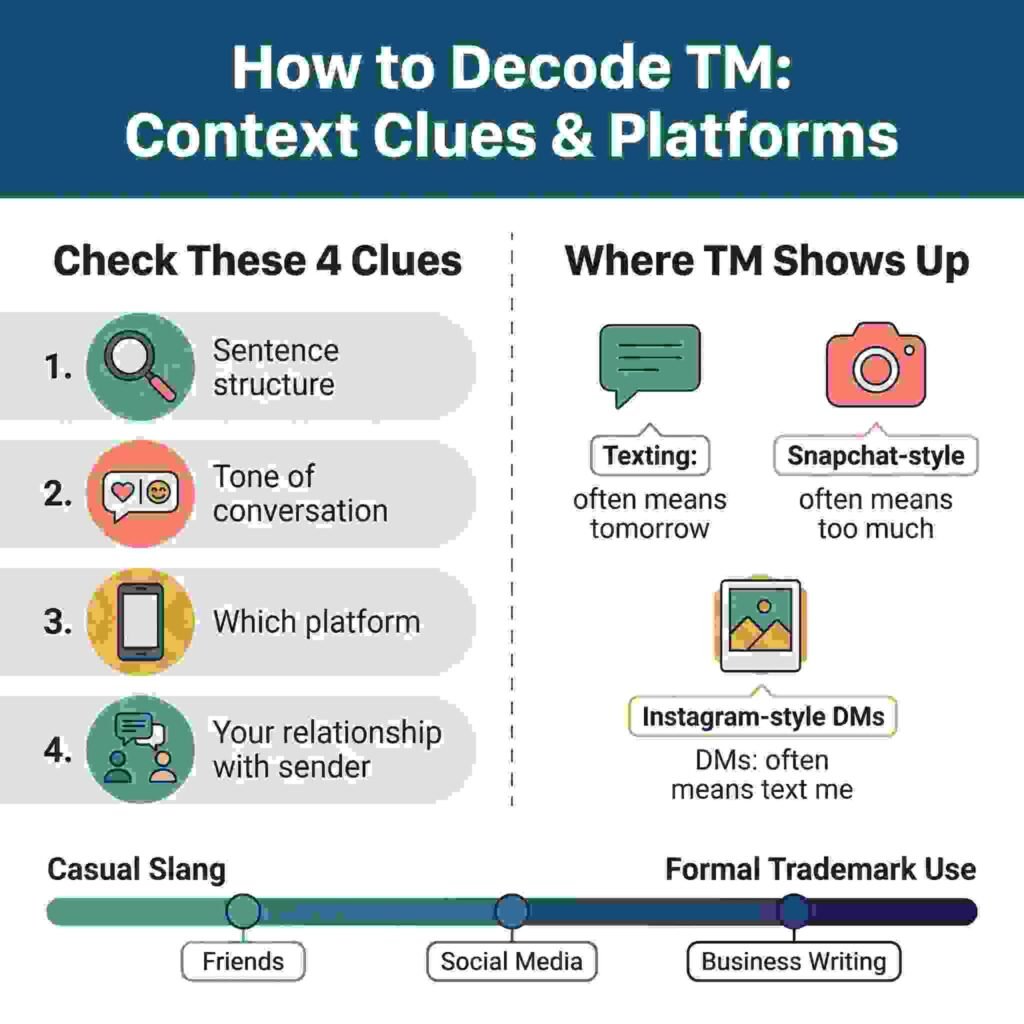
Since TM doesn’t have one fixed definition, context is everything. Here’s how to figure it out fast.
- Look at the sentence structure around the TM.
- Check the tone of the whole conversation, not just that one message.
- Notice the platform, since slang varies between texting and social apps.
- Consider your relationship with the sender and how they usually text.
- Watch for emojis, which often hint at the intended emotion.
If a friend texts “that show was TM,” they almost certainly mean “too much.” If a coworker emails about protecting a new logo with TM, they mean trademark. The words around the abbreviation almost always give it away.
TM Meaning in Text From a Girl or Guy
People often wonder if TM changes meaning depending on who sends it. In reality, gender doesn’t change the definition, but texting habits can shift the vibe slightly.
Guys tend to use TM quickly and without much extra context, often meaning “text me” or “tomorrow” as a fast way to keep plans moving. Girls may lean toward “too much” more often, especially when reacting to something funny, dramatic, or emotionally heavy. Neither pattern is a strict rule, though. The safest approach is still reading the full message rather than assuming based on who sent it.
TM Meaning on Social Media
Texting abbreviations don’t stay in one place. TM shows up constantly across social platforms, and the meaning usually stays consistent with regular texting, just faster and more casual.
On Snapchat, TM often means “tomorrow,” especially in messages about streaks or weekend plans. On Instagram, you’ll see it in DMs and comments, most often meaning “too much” when someone is reacting to a post, or “text me” when moving a conversation elsewhere. On TikTok, commenters frequently use TM to react to a video being over-the-top, funny, or dramatic.
Here are a few real-style examples of how this plays out.
WhatsApp chat: Person A: “Did you hear she quit her job today?” Person B: “Wait, that’s TM.”
Instagram DM: Person A: “TM, I need your opinion on this outfit.” Person B: “Sending you my thoughts right now.”
Group chat: Person A: “Can we push the trip to TM instead?” Person B: “Works for me.”
Notice how the meaning shifts slightly each time, based purely on what’s happening around it.
Where TM Came From
The origin of TM actually starts far from texting. According to Merriam-Webster’s tracking of trademark terminology, the TM symbol has long been used to indicate an unregistered trademark claim, separate from the official registered trademark symbol. Businesses have relied on it since the 1800s to signal that a name, logo, or slogan belongs to them, even while formal registration is still in progress.
The texting version of TM is much newer. As messaging apps, group chats, and social platforms exploded in popularity, people needed faster ways to communicate. Abbreviations like TM filled that gap, letting texters express complex reactions in just two letters. Teenagers and young adults were early adopters, and the slang meanings spread quickly across Twitter, Instagram, and eventually TikTok.
What’s interesting is that the slang meanings didn’t replace the legal one. Instead, they grew up alongside it. Today, both versions exist at the same time, and most people switch between them instantly without even noticing. You’ll use the trademark meaning while reading a product label in the morning and the “too much” meaning while texting a friend about last night’s drama that same afternoon. Context does all the heavy lifting, and most fluent texters make the switch so naturally that it barely registers as a decision at all.
Is TM Rude or Offensive?
No, TM is not rude on its own. It’s a neutral abbreviation that depends entirely on tone and context. A short response can sometimes feel cold if there’s no emoji or follow-up message, but that has more to do with texting style than the abbreviation itself.
If you’re unsure how someone meant it, it’s completely fine to ask. A quick “what do you mean by TM?” clears up any confusion instantly and keeps the conversation moving smoothly.
When to Avoid Using TM
While TM works well in casual chats, it’s not ideal everywhere. In professional emails, official documents, or formal communication, it’s better to avoid slang entirely and spell things out clearly. The one exception is the legal trademark meaning, which is appropriate and expected in business or branding contexts.
Here’s a simple way to think about it.
- Casual texting with friends: TM works fine as slang.
- Group chats and social media: TM is common and easily understood.
- Professional emails: avoid slang meanings of TM entirely.
- Business or branding documents: TM is appropriate for trademark use.
- Messages with someone new: consider spelling it out to avoid confusion.
Does TM Mean Different Things by Age or Region
Texting slang tends to shift between generations, and TM is no exception. Younger texters, especially teens and college-age users, lean more toward “too much” or “tomorrow” as their default reading. Older texters, including many millennials, are more likely to interpret TM as “text me” first, simply because that phrase matches the letters most directly.
Regional texting culture plays a smaller role, but platform habits still matter. Group chats built around fast, reactive messaging tend to favor “too much,” while one-on-one conversations about scheduling lean toward “tomorrow” or “text me.” None of these patterns are fixed rules, but they can help you make a faster, more accurate guess before you even ask for clarification.
TM at a Glance: Meaning by Context
Sometimes a quick comparison is easier than reading through every example. Here’s how TM typically breaks down depending on where and how it’s used.
- Casual chat ending a call: usually means “text me.”
- Reacting to a dramatic story: usually means “too much.”
- Backing up a promise or plan: usually means “trust me.”
- Talking about scheduling or plans: usually means “tomorrow.”
- Business, branding, or legal writing: always means “trademark.”
Keeping this quick breakdown in mind makes it much easier to read a message correctly on the first try, without needing to ask the sender what they meant.
How to Reply When You’re Not Sure
Even with all this context, there will be moments where TM still feels unclear. That’s completely normal, and there’s no need to overthink it. A simple, friendly follow-up works better than guessing incorrectly and responding off-topic.
Try something like “Ha, what do you mean by TM?” or “Wait, TM as in tomorrow?” Both options keep the conversation light while getting you the clarity you need. Most people won’t think twice about explaining, since abbreviations like this are genuinely ambiguous even for frequent texters.
Similar Abbreviations Worth Knowing
TM isn’t the only short abbreviation that causes confusion. Related shorthand like “tmrw” (tomorrow), “TMI” (too much information), and “ttyl” (talk to you later) all follow the same pattern of trading full words for speed. Knowing a few of these makes it much easier to keep up with fast-moving conversations without constantly stopping to ask what something means.
Frequently Asked Questions
Does TM always mean trademark?
No. Trademark is the formal meaning, but in texting and social media, TM usually means text me, too much, or trust me.
What does TM mean from a girl vs a guy?
The meaning doesn’t change by gender, but texting habits can. Context always matters more than who sent it.
Is TM the same as TMI? No. TMI means “too much information,” while TM has several different casual meanings depending on context.
What does TM mean on Snapchat or Instagram?
It usually means tomorrow on Snapchat and either too much or text me on Instagram, depending on the message.
Is it rude when someone texts you TM?
Not typically. TM is a neutral abbreviation, and any rudeness usually comes from tone, not the term itself.
Final Thoughts
So, what does TM mean in text? The honest answer is that it depends on the moment. TM can mean text me, too much, trust me, tomorrow, or trademark, and the only real way to know for sure is to look at the message around it. Once you get used to reading context and tone, decoding TM becomes second nature.
The next time TM pops up in your messages, you won’t need to pause and wonder. Check the sentence, consider the platform, and you’ll know exactly what the sender meant, no guessing required.